Make Everyday a Speech, Language and Communication Day in Your Setting
We’ve all been hearing that early intervention is vital to ensure children are not left behind and that they are ‘school ready’. But what does early intervention look like and how can we engage pupils and families?
School Readiness
The term ‘school readiness’ has been circulating a lot recently, yet when asking Reception teachers their number one criteria, it is often to do with pupils’ growing independence -toileting and dressing themselves. However, without children’s ability to communicate their wants and needs, interact with others and understand healthy routines, children are going to find personal care tricky, especially in a busy classroom.
We all appreciate that children develop at their own pace and there are some who will need more help than others. But, if they are struggling with their social skills and play, attention and listening, understanding of language and expressive communication skills, which are needed to enjoy their school day and manage their growing independence, then as educators we need to support them. It is vital to not just hope pupils will catch up at some point but to start working with the child and their family to improve these skills before the gap widens.

How to Build a Communication-Friendly Environment that Closes the Gap
In Nursery and Pre-school settings, early intervention might take on a universal approach, creating a communication-rich environment so every child can benefit.
Here are some easy strategies that you can get started with today.
Start the session right
This sounds obvious but when we are busy we can miss simple gestures, such as greeting our children, which not only sets the tone of the day but also models the skills we would like the children to develop. Welcome children when they come in. Come to their eye-level and use their name. Be pleased to see them and model clear structured language; why not try parentese too?
Don’t be afraid to use parentese
For some of your pupils they might not have experienced this sing-song way of talking, where you slow down tempo, stretch out vowels, encourage turn taking and giving time for a response. The Journal of Child Language (2024) highlighted the importance of this type of interaction with infants and young children. Children who consistently experienced parentese were more likely to have greater success at the start of formal schooling as they had larger vocabularies, more advanced sentence structures and understood about turn taking.
Teach listening skills explicitly
While all foundational early literacy skills are important, developing children’s attention and listening skills are particularly vital as these are the key precursor to the development of early phonics skills. Encourage active listening through fun activities. Can they hear different environmental sounds – a door closing, the jingle of keys, a car’s horn? Pulling anything from a bag or hiding it, instantly gets their attention! Can they hear different instrument sounds?
Singing nursery rhymes – joining in and copying - are amazing ways to boost phonological awareness (hearing the sounds in words and rhyme). Music often grabs little children’s attention, encouraging active listening, call and response, movement and keeping the beat. Once these skills are starting to develop, you can follow on with oral blending and segmenting.
Communication-friendly environments
Supporting your pupils’ communication with symbols around the room, visual timetables, ‘Now and Next’ boards and keyrings with key words and pictures, scaffolds children’s understanding. It also slows our speech down as adults, helping us to model talking. Pictures reinforce pupils’ understanding of the wider world and allow them to see and hear key vocabulary. Using symbols can give children a voice, even if to start with, they are just pointing at them. Signing can also be another way to help pupils make connections, remember important words and communicate. When using symbols and signing, always speak slowly and clearly; choose your words carefully and talk in simple sentences as it helps pupils understanding. Also give your children time; time to think and respond.

Engage with Parents
The speech, language and communication strategies you use in your setting will have the biggest impact if they are embedded across your whole environment and also clearly communicated with home. Giving parents ideas on how to play speaking games, encourage attention and listening with their child, to use parentese, symbols and signing, can really help boost children’s progress. After all, parents are their children’s first teachers.
Identifying Those Pupils who Need Extra Support
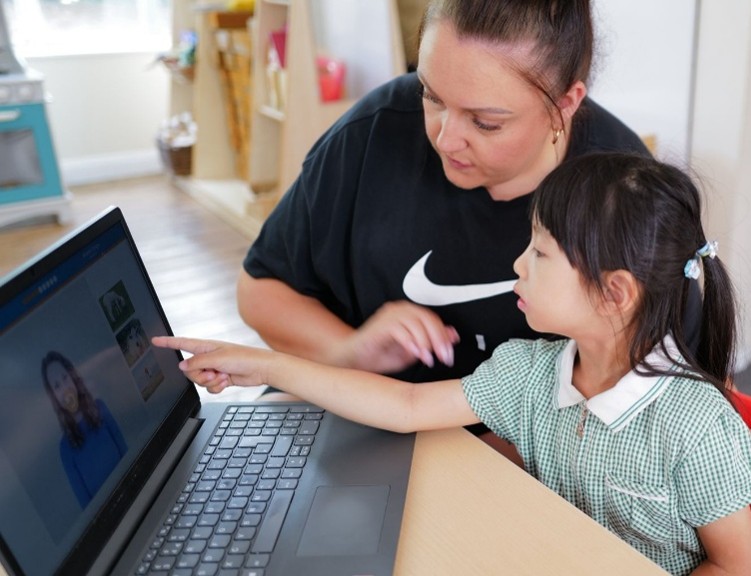
It can feel daunting to identify specific pupils for targeted intervention. Literacy Gold has created Talk Stars, which has an easy to use Language Development Assessment for 2 – 5 year olds that highlights children’s individual strengths and weaknesses and then sets a simple, online scheme of work to meet specific needs.
Adult led, group interventions can help children struggling with the speech and communication needs; however Talk Stars, an online intervention which can be run 1:1, in a small group or delivered to the whole class has many significant advantages:
- All staff can consistently deliver a quality intervention that reinforces your communication-friendly environment
- Talk Stars is a short (5-10 mins), effective intervention
- Online reporting and progress is tracked as they play, which is all centrally stored for monitoring
- Parents can login from home and learn with their child
- Easy to use, no lesson prep and connects both home and nursery/ preschool effortlessly.
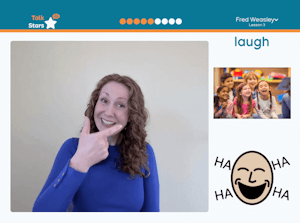
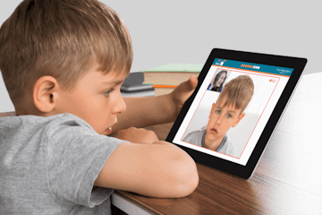
Children make significant progress using Talk Stars. Lessons are packed with attention and listening games, singing and signing; vocabulary is explicitly taught and also reinforced with signs and symbols. Children’s online lesson interaction, choices and audio files are saved for you to track progress. The child is encouraged to join in with our online teacher and the video playback section in the lesson helps the child to see how their tongue and mouth move when speaking.
Literacy Gold’s Talk Stars allows you to screen and intervene, taking the stress out of early intervention as it engages pupils and families, strengthens your communication-focused setting and helps you support school readiness, closing the communication gap.