
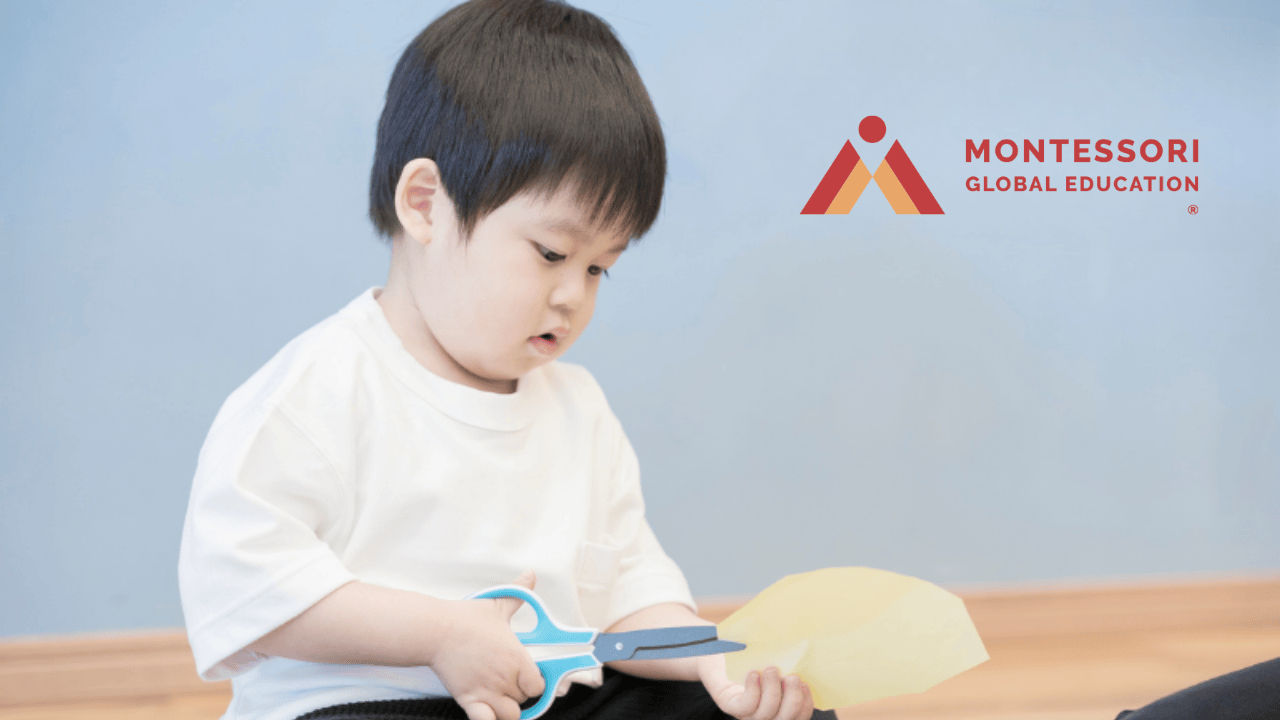
When we speak about learning, we often think of outcomes, milestones, and measurable progress. Yet development is not always loud or immediately visible. Some of the most formative moments in childhood unfold in ordinary settings:
- A child stirring batter in a kitchen.
- Sorting socks from the laundry basket.
- Balancing carefully along the edge of a pavement.
- Lining up stones collected on a walk
In each of these moments, development is active and alive.
Creative learning does not belong only in classrooms. It lives in kitchens, gardens, playgrounds, car journeys, parks, and quiet corners of the home. It appears wherever children are invited to participate meaningfully in the world around them.
We often use the word play to describe these experiences. Yet what we are witnessing is something far deeper: children organising their understanding through active participation.
Creative engagement is woven into the fabric of daily life. It is how children make sense of experience.
The Opportunity for Learning in Every Moment
Children are constantly constructing understanding.
When they help prepare a table, they are sequencing, classifying, and contributing. When they build, arrange, or combine materials, they are experimenting with balance, proportion, and spatial awareness.
Creative moments are rarely random. They are responses to developmental need.
Children naturally repeat actions not because they are told to, but because repetition strengthens something internally. They return to tasks that challenge them just enough. They persist when the experience feels purposeful.
This is not accidental behaviour. It reflects a deep drive toward growth.
When adults recognise opportunity in everyday activities, they begin to see that learning is not confined to designated ‘educational’ time. It is continuous.
Curiosity, Creativity and the Spirit of Play
At the heart of creative moments, lies curiosity.
Children are naturally inclined to ask, to test, to combine, to imagine. They are not simply filling time; they are exploring possibility. A cardboard box becomes
a vehicle. A collection of leaves becomes a pattern. A simple question becomes an investigation.
This is where creativity and play meet.
Play is often the visible expression of curiosity. It is how children explore ideas before they have the language to fully explain them. It allows them to experiment safely, to make adjustments, to begin again without fear of failure.
Curiosity fuels creativity; creativity gives form to curiosity.
When adults make space for these moments - without rushing them, without over-directing them - children begin to trust their own ideas. They discover that their questions matter. They experience the satisfaction of thinking something through.
These moments may look light, even joyful - and they are. But they are also serious in their intent. Through creative exploration, children develop confidence in their ability to engage with the world.
We do not need to manufacture curiosity. We need to recognise it, protect it, and give it room to grow.
The Adult's Presence
The quality of creative learning depends greatly on the adult’s presence.
An adult who notices.
Who invites participation rather than performs tasks for the child.
Who allows time for effort.
Who values process over speed.
This presence can be found in educators, certainly - but also in parents, grandparents, carers, and anyone who engages with children in their early years.
Guidance, when offered gently and intentionally, strengthens confidence. Structure, when it is calm and predictable, creates security. Within that sense of safety, exploration expands naturally.
The balance is subtle. It does not require control; it requires awareness.
Development Cannot Be Rushed
Early development unfolds in layers. It strengthens through repetition, experimentation, and gradual mastery.
Creative engagement supports qualities that extend far beyond childhood:
- Curiosity
- Resilience
- Agency
- Problem-solving
These capacities underpin later academic success and lifelong adaptability.
When we prioritise speed over depth, we risk interrupting this rhythm. When we honour process, we allow development to consolidate.
At Montessori Global Education, we work with a wide range of schools, educators, and community initiatives across diverse contexts. What consistently unites strong practice is not a specific label, but a shared commitment to keeping the child at the centre - recognising that meaningful engagement, thoughtful environments, and attentive adults shape confident, capable learners.
Creative learning is not about lowering expectations. It is about understanding how growth truly occurs.
Holding Balance in Modern Childhood
Adults today navigate complex expectations around progress, evidence, and achievement. These realities shape decisions in homes and educational environments alike.
The invitation is not to choose between structure and creative experience, nor between accountability and exploration. It is to understand how they can inform one another.
How do we protect time for deep engagement in busy schedules?
How do we recognise effort as well as outcome?
How do we ensure that children are participants, not passive recipients, in their own development?
These questions invite reflection rather than reaction.
When we return to careful observation - to what children demonstrate when trusted with meaningful involvement - we are reminded that creative learning is not an enrichment. It is the foundation.
Seen in this light, play - in its truest sense - carries profound developmental significance. The task before us is not to amplify it loudly, but to hold it confidently - in classrooms, in homes, and in everyday life - recognising opportunity in every moment.
Key Insights
- Creative learning unfolds in everyday life - not only in formal educational settings.
- Curiosity is the driving force of development; creativity gives it expression, and play makes it visible.
- Children construct understanding through active participation, repetition, and meaningful involvement.
- The adult’s attentive presence shapes confidence, security, and depth of exploration and engagement.
- Development strengthens through process, not speed; growth consolidates when time and repetition are respected.
- Creative engagement nurtures qualities that endure: curiosity, resilience, agency, and problem-solving.
- Seen in its truest sense, play carries profound developmental significance and forms the foundation of lifelong learning.
