
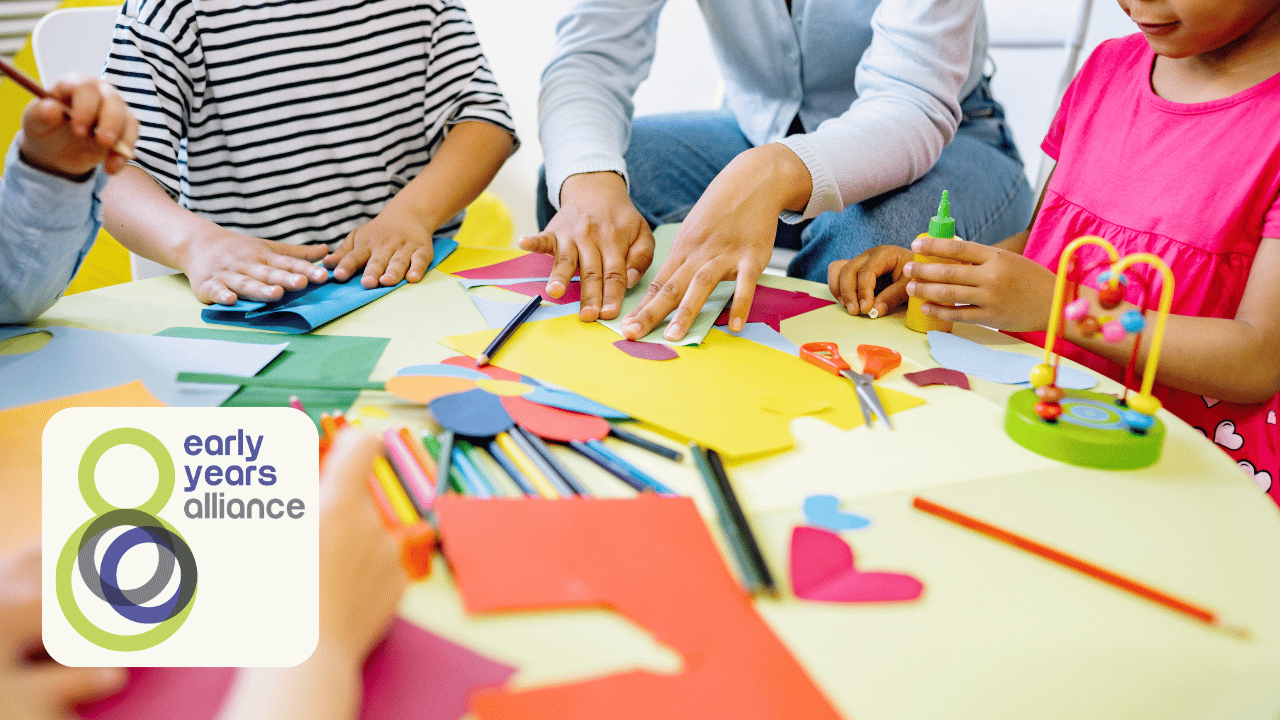
Creativity is often described as the spark that ignites innovation, imagination, and problem-solving. In the early years, it is required to be able to get on a child’s level and work within their way of seeing and experiencing the world. When children engage in creative play, they are not just having fun; they are building the foundations for lifelong learning, resilience, and confidence.
Why Creativity Matters in Early Years
The early years are a time of rapid brain development. During this period, children are naturally curious and eager to explore. Creativity nurtures this curiosity by encouraging children to think beyond the obvious, experiment with ideas, and express themselves freely. It is through creative experiences that children learn to:
- Solve problems: When a tower of blocks falls, a child learns to try again, adjusting their approach.
- Communicate feelings: Through painting, storytelling, or role-play, children express emotions they may not yet have words for.
- Build confidence: Creative play allows children to take risks in a safe environment, fostering independence and self-belief.
Creativity can be found in art or music, but don’t forget that it’s also present in every aspect of play, from building dens to inventing games. It is about thinking differently, exploring possibilities, and finding joy in discovery.
The Why of Creative Play
Creative play is the heartbeat of early learning in childhood. It is open-ended, child-led, and full of opportunities for imagination. Whether it’s pretending to be a shopkeeper, creating a masterpiece with finger paints, or turning a cardboard box into a spaceship, creative play empowers children to take ownership of their learning.
Benefits of creative play include:
- Language development: Role-play and storytelling enrich vocabulary and communication skills.
- Social skills: Collaborative play teaches sharing, negotiation, and empathy.
- Critical thinking: Children learn to plan, predict outcomes, and adapt when things don’t go as expected.
The How of Creative Play
As early years educators, we have the privilege of creating environments where creativity thrives. Here are some practical ways to nurture creative play:
Provide open-ended resources
Loose parts like shells, fabric scraps, and wooden blocks invite children to use their imagination. These materials have no fixed purpose, allowing endless possibilities.
Create time and space for play
Creativity cannot be rushed. Ensure children have uninterrupted time to explore ideas and develop their play.
Value the process, not just the product
A child’s painting may look like a swirl of colours, but the story behind it is what matters. Celebrate effort and imagination rather than focusing on perfection.
Be a co-explorer
Join in the play without directing it. Ask open-ended questions like, “What might happen if…?” or “How could we make this even bigger?” to spark deeper thinking.
Encourage risk-taking
Creativity flourishes when children feel safe to try new things. Offer reassurance and support when they face challenges.
Creativity in Everyday Practice
Creativity doesn’t require expensive resources or elaborate setups. It can be found in the simplest of moments, like singing during tidy-up time, making patterns with leaves in the garden, or inventing a story while waiting for lunch. These experiences show children that creativity is part of life, not just an activity.
The Bigger Picture
In a world that is constantly changing, creativity is a vital skill for the future. By nurturing it in the early years, we are giving children the tools to adapt, innovate, and thrive and become the architects, inventors, explorers and scientists of tomorrow. But just as importantly, we are helping them discover the joy of learning and the confidence to express who they are today.
As educators, let’s champion creativity as an essential part of childhood. Today’s imaginative play could be the beginnings of tomorrow’s breakthroughs.
“Imagination is more important than knowledge. For knowledge is limited, whereas imagination embraces the entire world.” – Albert Einstein
The Early Years Alliance offers resources on play and creativity, and right now, you have the opportunity to get physical copies of some of our publications at a reduced price. We’re making the move to electronic versions of our trusted early years publications and resources, meaning you can save on our current printed copies! Our Clearance bundle: Play includes four publications that support creativity.
