
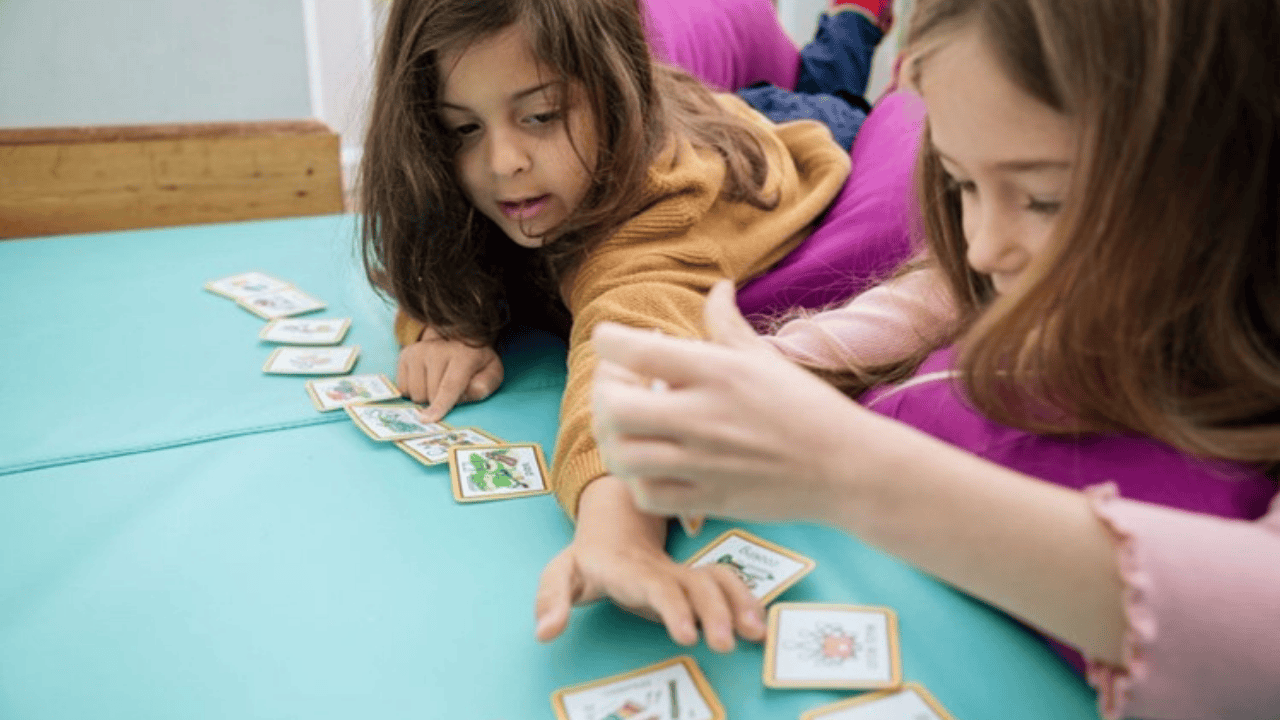
For many young children — especially those with Special Educational Needs and Disabilities (SEND) — understanding spoken words on their own can be difficult. As soon as words are spoken, they disappear, meaning a child has to both remember them, and process what was said.
Pictures or visual symbols, on the other hand, stay consistent for a child to look at and process. They show children what is happening around them, what is expected and what will happen next, thus allowing them to feel calmer, more confident and more independent. They are a fantastic way to support children’s communication and understanding.
Put simply, when children can see what is happening, the world often feels much less overwhelming. And when children feel secure, they are far more ready to play, learn and take part in the day.
Why Visual Communication Supports Children's Understanding
Young children are naturally visual learners. Many find it easier to understand pictures than spoken instructions alone. This is why visual communication works so well in early years settings.
Visual symbols provide a fantastic, alternative form of communication because they:
- Provide clear and consistent information
- Don’t disappear like spoken words do
- Have no tone of voice
- Are transferable between different environments
- Are universal across all languages
- Show children what is coming up in their day
- Reduce anxiety by removing the fear of the unknown
- Help children feel a sense of control over their day
For children who experience anxiety or communication difficulties, removing the unknown can make a significant difference. When children can see what is happening, they are often calmer, more confident and ready to engage in learning and play.
Why Visual Timetables Help Children
One of the most common ways visual symbols are used in early years settings is through visual timetables.
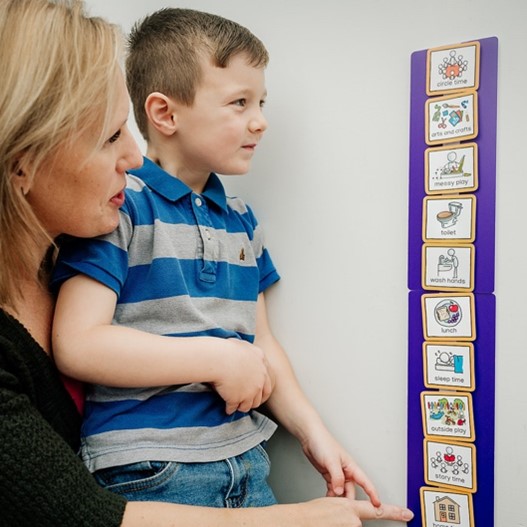
A visual timetable uses symbols or pictures to show the order of activities throughout the day. Instead of relying only on spoken instructions, children can see the structure of the day clearly.
For children with SEND or anxiety, this predictability can make a huge difference.
Take morning drop-offs, for example. A child with separation anxiety is likely to be extremely worried about what will happen next. They are likely wondering when they will see their parent again, or what will happen between now and home time.
A visual timetable answers this question for them in a clear and simple way. The child can see the structure of their day. They can see the activities ahead and, most importantly, they can also see when home time will come. Knowledge is power. Knowing that home time is coming later in the day can allow a child to relax and enjoy their time with you. Instead of feeling like the day will go on forever, they can see that there is a clear sequence of activities and that their parent will return.
Visual symbols also allow transitions to become much smoother. Moving from one activity to another — such as from playtime to tidy-up time — feels less sudden when children can see the change coming.
Over time, consistent use of visual timetables helps children build confidence, independence and a stronger understanding of daily routines.
Other Visual Communication Resources for Your Setting
Visual symbols aren’t just helpful for visual timetables. There are many other simple ways they can support children throughout the day.
Now and Next boards are particularly helpful for children who struggle with transitions. These simple boards show two steps — what is happening now and what will happen next. Pair this with a sand timer to support those that find transition particularly tricky.
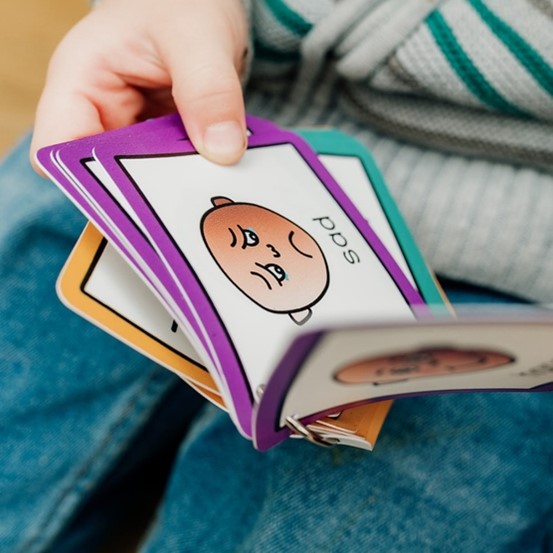
Symbol keyrings provide visual supports that can be taken with you wherever you go.
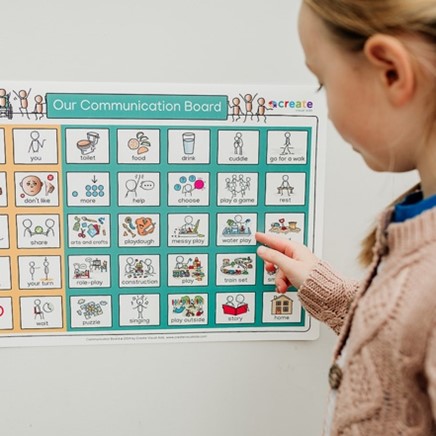
Communication boards allow children to point to symbols to express their needs, choices or feelings, helping them communicate even if their spoken language is still developing.
Choosing boards help children make decisions by presenting a small number of visual options, supporting independence and decision-making. This is particularly useful if a child is feeling overwhelmed when deciding what they should play with.
A communication book combines a range of different visual resources in one handy book which can be taken with a child wherever they go. This helps support the bridge between home and your setting, keeping a range of symbols together to support communication wherever they are.
Even simple signs around your setting can help children know where they can find things. Again, this gives them a sense of control and independence — and allows them to get involved in that all important time of day: tidy-up time!
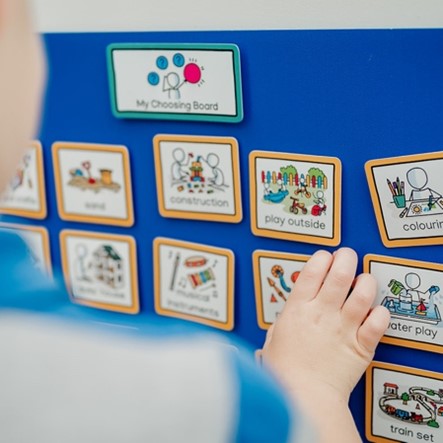
Using Visual Symbols to give a Child a Voice
As well as using visual symbols to communicate to a child what is happening, they can also be used to give a child a method with which they can communicate with others. When a child struggles to communicate with others, for whatever reason, they can become incredibly frustrated. By giving them simple, clear pictures, they can communicate using these instead. Here you have a fantastic tool for supporting a non verbal child, or one with a speech delay.
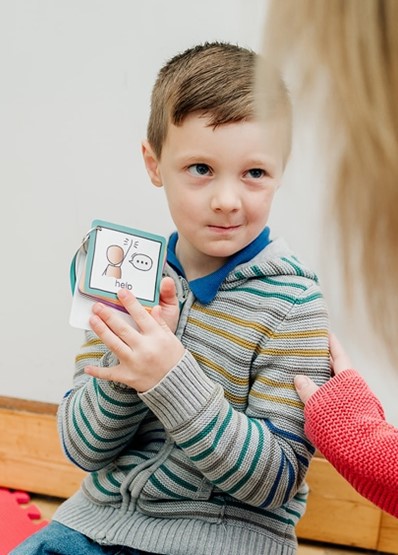
Using Visual Symbols to Support Emotional Development
Many young children find it difficult to recognise or explain how they are feeling. They might experience a big emotion but not yet have the language to describe those feelings. Visual emotion symbols give children the tools to begin to identify and communicate how they feel. Having such resources readily available to young children means they are provided with a voice to express how they are feeling when they can’t find the words. You can also encourage a child to choose visual supports to express their needs when they are dysregulated – a time when children find it the hardest to use words.
When children have a clear and accessible way to express their emotions, adults can respond more effectively. Over time, this helps children build emotional awareness, confidence and early self-regulation skills, plus it allows their carer to understand them better.
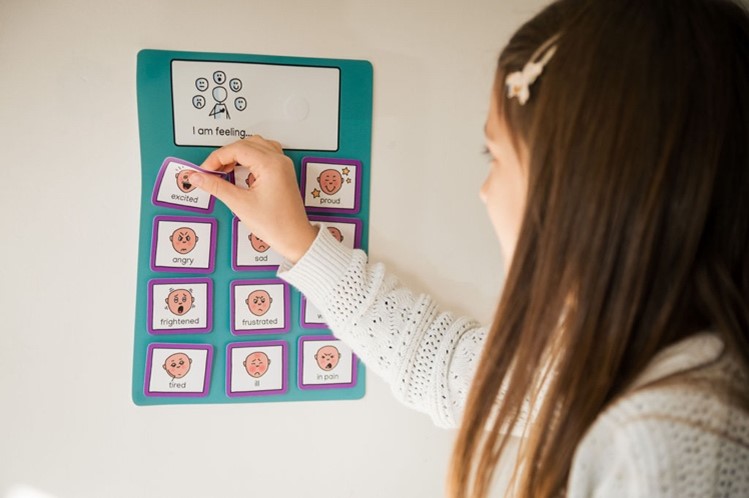
Supporting Early Literacy with Visual Supports
Visual symbols used alongside written words also support early literacy. Children begin to recognise that both pictures and text carry meaning, and can begin to match initial sounds to pictures.
Visual communication is one of the simplest ways early years settings can reduce anxiety, support communication, help children with SEND understand what is happening around them, support emotional develop and give children a voice – all with a few simple pictures! When visual communication becomes part of everyday practice, it can transform the learning environment for all children, not just those with SEND.
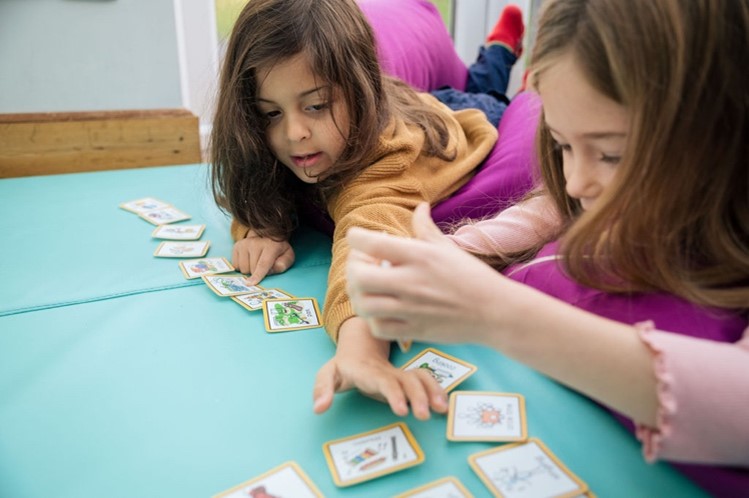
About Create Visual Aids
Create Visual Aids provides ready-to-use visual symbol resources designed to support communication, independence and inclusion in homes, hospitals, businesses, early years settings and schools.
Founded by a mum and qualified teacher, we combine practical classroom experience with a real understanding of children’s needs. Our resources are also designed to be incredibly durable — because anyone working in early years knows that resources need to withstand busy classrooms and even the strongest little hands.
You can explore our full range of resources at www.createvisualaids.com, and follow Create Visual Aids on Facebook, Instagram and TikTok for ideas, tips and inspiration on using visual supports in your setting. Create Visual Aids will also be exhibiting at the Childcare & Education Expo in London this March, and we look forward to seeing you there!
