
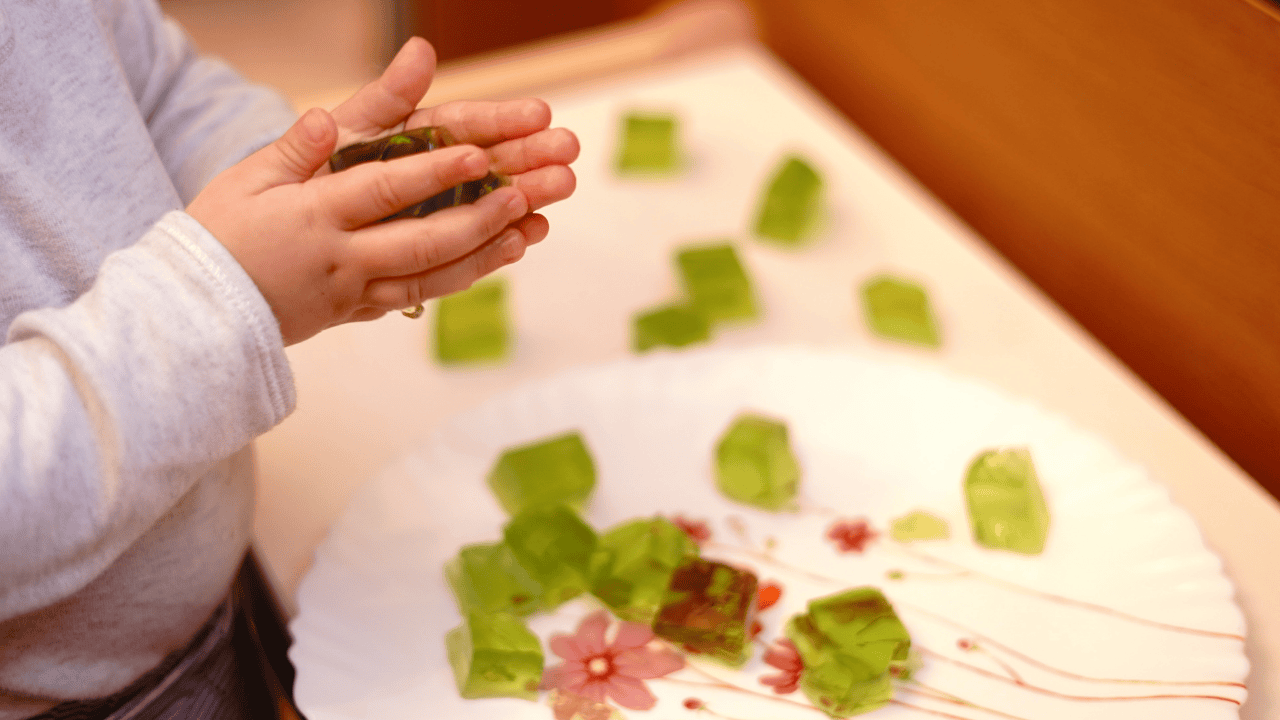
As early years professionals, we all know play is vital to children’s development. Play that allows children to experience and explore something new can be especially powerful and help them profoundly.
For children aged 0-5 years, engaging in play that falls under ‘sensory play’ can enhance a wide variety of skills; cognitive, language, motor, and social skills. However, sometimes parents and carers may feel unsure about how to effectively incorporate sensory activities for their children into their daily routines.
These children may still have sensory experiences in the early years setting they go to. But we as early years educators can help support children further by encouraging parents and carers to feel more confident about sensory play in the home environment.
How do we start the conversations about the benefits of sensory play and the enjoyment children get from it?
If a parent or carer is reluctant to help their child engage in sensory play in the home environment, this might be due to a knowledge or confidence gap. Educators can adopt several key strategies to help parents and carers understand more about the benefits and mitigate some of their worries.
If you’d like to encourage parents to engage in more sensory play, it’s important to have up to date knowledge on what’s recommended. Start with conducting your own research to investigate what is current and proven to benefit children. This will help you find studies that you can share with parents and carers that highlight the cognitive, emotional, and physical benefits of sensory play. Having the support of external sources will make it easier to explain how sensory play promotes exploration, creativity, and problem-solving skills.
This lets parents and carers know there are real scientific studies that back up your knowledge, rather than ‘just your opinion’.
One place to start is How Mud Boosts Your Immune System by Alessia Franco and David Robson.
This article emphasises the developmental benefits of muddy play. It explains how messy play can have benefits like enhancing fine and gross motor skills and encouraging social interaction, alongside helping your child’s immune system develop due to the contact with microorganisms.
The article also highlights the potential emotional wellbeing benefits of sensory activities, like reducing anxiety and stress, and allowing children to express their emotions and build resilience.
Using a resource like this can help you illustrate how muddy play aligns with educational goals that parents and carers will be familiar with, like the early years foundation stage, and how sensory play is a valuable part of the curriculum.
Get hands on
If you’d like to go a more direct route, you could invite parents and carers in to participate in sensory play sessions with their children, or organise family events. By giving them opportunities to experience sensory play first hand, you can help them understand the benefits.
Sharing experiences and providing specific examples of sensory activities, such as making mud pies, creating mud art or making your own natural paint, can help to illustrate how fun and educational this type of play can be.
Be prepared to address any concerns. Parents and carers might for example worry that allowing children to engage in messy sensory activities could lead to unsanitary conditions or create extra work for them.
In some cultures, there may be expectations regarding cleanliness and children’s behaviour or what activities are deemed appropriate. Families might refrain from allowing sensory or messy play if it doesn’t align with these social norms.
Some cultures prioritise structured learning and formal education over play, viewing it as less beneficial for a child’s development. Sensory play, which is often unstructured, might be seen as frivolous or unnecessary.
Adults who did not engage in sensory play during their own childhood may be less likely to understand its benefits and therefore may not encourage their children to participate in such activities.
All these factors, or a combination of them all, can create a complex landscape of attitudes towards sensory play that varies significantly. Whatever the reason, it’s important that you stay respectful of parents’ or carers’ views, and try to understand their individual reasons for why they feel the way they do.
If you take care to be approachable, you can create a space where parents and carers feel able to discuss any worries they may have about cleanliness or safety. Offer tips on how to manage these aspects while still allowing children to enjoy the benefits of these activities. Encourage adults to create opportunities for sensory play at home, offering suggestions for safe and accessible ways to manage play and enhance children’s curiosity.
Learning more
If you would like to learn more about sensory play and how messy play can help support children’s development, the Early Years Alliance has a variety of training and resources available for members and non-members. You can find them all on EYA Central, the Alliance’s one-stop-shop for training and publications.
