
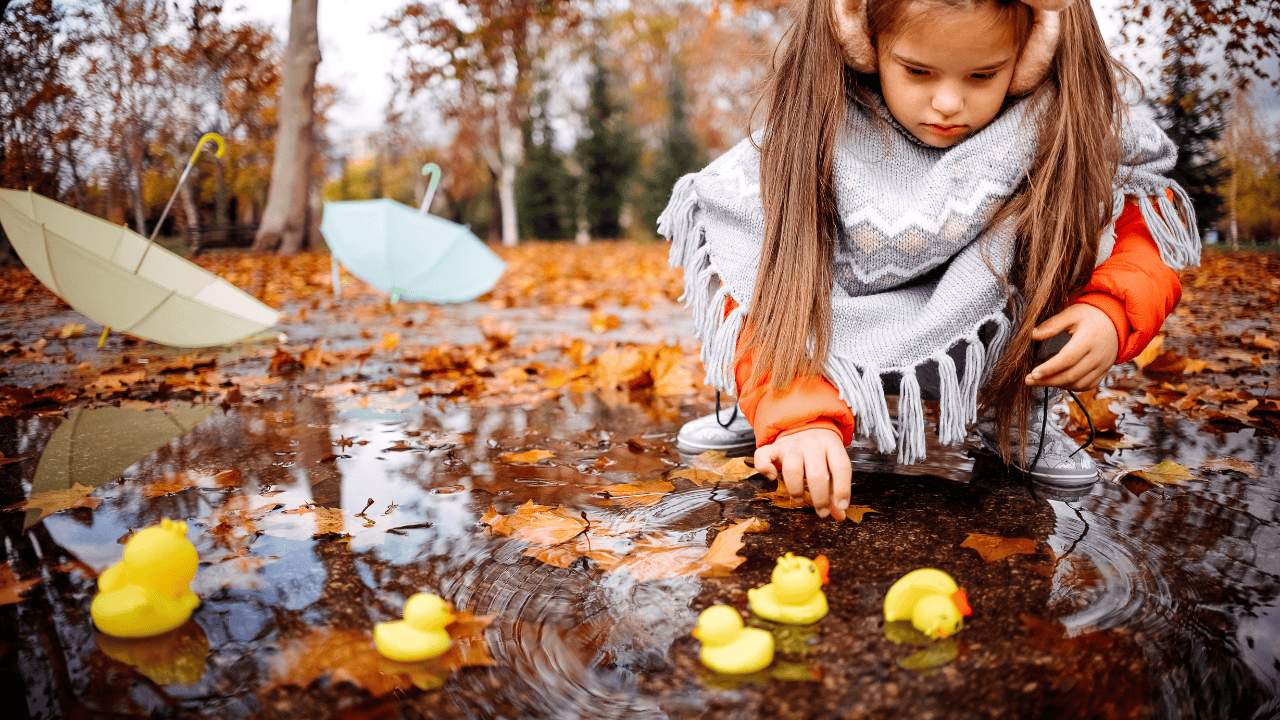
In early years settings, the most powerful learning doesn’t come from expensive toys or structured activities—it emerges from the simplest of materials. A pinecone becomes a baby dragon, a cardboard tube transforms into a telescope, a handful of shells evolves into a family having tea. This is the wonder of loose parts play: a world where imagination leads, resources take on infinite forms, and children become architects, storytellers, scientists, and explorers all at once.
What is Loose Parts Play?
Simon Nicolson, an architect, championed using everyday objects rather than toys with a predetermined purpose. He said, ‘in any environment, both the degree of inventiveness and creativity and the possibility of discovery, are directly proportional to the number and kind of variables in it.’
Simply put, loose parts are open-ended resources that can be used in multiple ways. Children can explore and discover without limits or be bound by toys with a predetermined purpose or by ability, gender, or stereotype. Children can use the resources exactly how they choose.
An Endless World of Possibility
In a time where many children’s lives are increasingly structured, digital, or hurried, loose parts offer freedom. They have no correct outcome, no predetermined narrative, and no single way to use them. This makes them wonderfully inclusive. A wooden block doesn’t expect a child to have strong fine‑motor skills; a stone doesn’t care which language a child speaks; a fabric scrap doesn’t mind if it becomes a superhero cape, a blanket for a doll, or the roof of an imaginary shelter.
Loose parts include natural resources such as log slices, pebbles, seashells, sticks, leaves, twigs, glass beads, buttons, different-sized boxes or tins. Lots of natural resources are available outside and are free! Leaves, petals, moss, etc can all be used to create art pieces and enhance children’s play. Being outdoors also has the benefits of children enjoying the seasons through the availability of natural resources such as pinecones and conkers in autumn.
Children love being able to use drainpipes or guttering to cascade water down or ramps to use with balls or anything else that will roll. Curious objects such as typewriters, overhead projectors to explore light and shade, old-fashioned telephones, or weighing scales with a range of different sized weights can be found cheaply at car boot sales and in charity shops. Other loose parts include metal teapots, jugs, scoops, conkers, keys, bangles, ribbons, fabric, pegs, and everyday kitchen objects. Remember how much fun children have with empty boxes and wrapping paper, while the toys inside sit untouched!
Loose parts don’t cost lots of money, and many are free, but the benefits of using resources in multiple ways are hugely beneficial to children’s development. Using less plastic, which is commonly a feature in children’s toys and reusing and recycling instead is also better for the environment.
Remember to check that the resources are safe to use for children. Be aware of sharp edges and choking hazards.
How Can Loose Parts Play Support Children's Development?
Loose parts support children’s all-round development as well as promote essential skills such as problem-solving, creativity, curiosity, investigation, and observation skills. This type of play invites children to take the lead. Instead of following instructions, they generate ideas. Instead of completing an activity, they create an experience. Loose parts naturally support the development of executive function—those important cognitive processes like planning, flexibility, and self-regulation that underpin success in later learning.
And crucially, creativity thrives. Because loose parts have no fixed identity, children must imagine one. A child who sees endless possibilities in a stick today may see endless possibilities in themselves tomorrow.
Sticks, Stones and Stories
Many loose parts come straight from the outdoors—leaves, stones, wood slices, seed pods, shells. Nature is, in many ways, the ultimate loose parts toolkit. Natural materials invite sensory exploration: the smoothness of a pebble, the rustle of dried leaves, the earthy scent of bark. They connect children to the world around them, nurturing awe, curiosity, and respect for the environment.
Whether used in a mud kitchen, a den, or a nursery garden, natural loose parts slow children down. They encourage mindfulness. They promote movement. And they spark conversations about seasons, habitats, weather, and change. They remind us that learning simply needs opportunity.
Where materials are accessible, inviting, and meaningful, we observe with curiosity, stepping in, to extend thinking but avoiding the temptation to steer the play. We listen to the stories children tell with their creations.
In Summary
Children don’t need more toys; they need more possibilities. They need spaces where they can wonder, imagine, and reinvent the world in their own hands. When we provide loose parts, we are not just offering resources—we are offering freedom, joy, creativity, and the building blocks of lifelong learning.
Learning More
If you would like to learn more about loose parts play, the Early Years Alliance has Virtual Classroom training and resources available for members and non-members. You can find them all on EYA Central, the Alliance’s one-stop-shop for training and publications.
You can also find more information about the training we offer on the Early Years Alliance website.
