
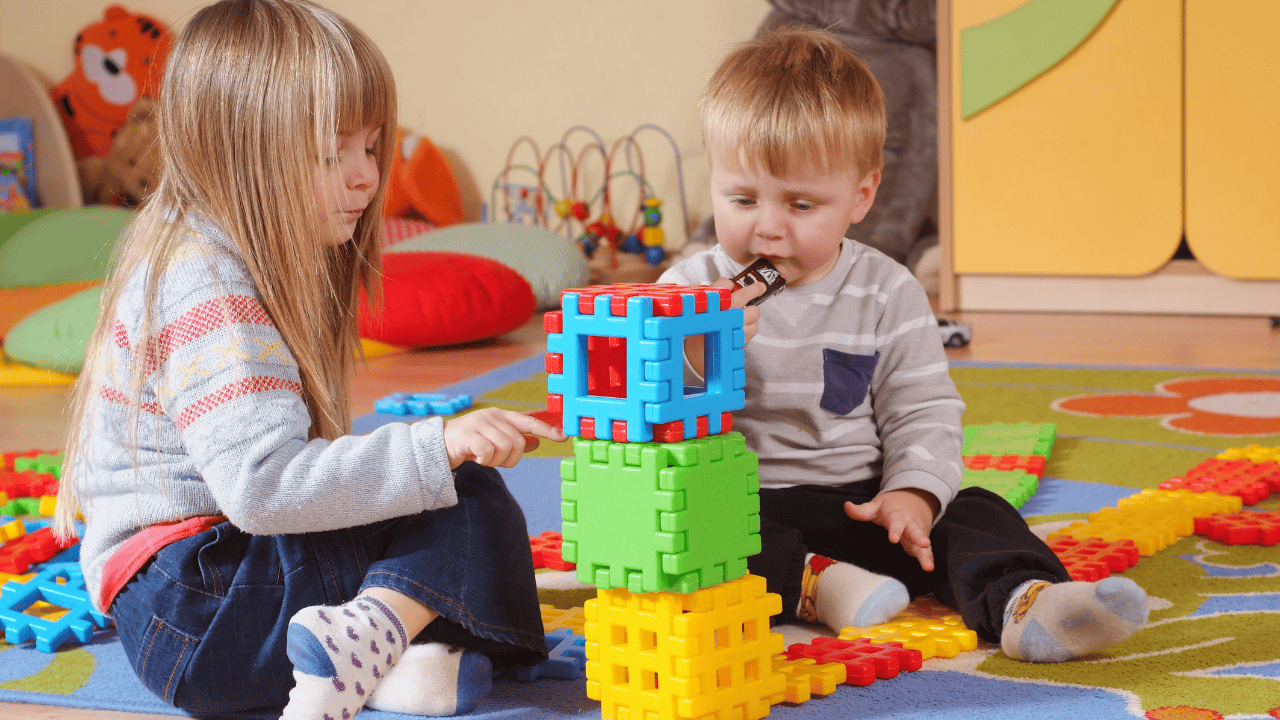
Early years settings are busy, vibrant places. Children are playing, exploring, moving, talking and learning throughout the day. Within this activity something incredibly important is happening - children are developing the communication skills that will support them for the rest of their lives.
Speech, language and communication develop through everyday interactions. Children learn to communicate when they are listened to, when adults respond to them and when they have meaningful opportunities to share attention with others. For many children this happens naturally through play and daily routines. For others, communication may develop in different ways or at a different pace.
This is where the environment plays an important role. A communication-friendly environment helps remove barriers to interaction and supports every child to take part, express themselves and connect with others.
The encouraging news is that creating this type of environment does not require major changes. Often it is the small, thoughtful adjustments that make the biggest difference.
Communication Looks Different for Every Child
One of the first steps in creating a communication-friendly environment is recognising that communication is not limited to spoken words.
Children communicate in many different ways. They may use gestures, facial expressions, eye gaze, body movements, vocalisations as well as single words or longer sentences. Some children may use visual supports, signs or communication aids. Others may use familiar phrases or scripts to join interactions.
All of these are meaningful forms of communication.
A neuro-affirming approach recognises that children have different communication profiles and strengths. The aim is not to expect every child to communicate in the same way, but to create environments where all forms of communication are recognised and valued.
When practitioners respond positively to children's attempts to communicate - whatever form they take - children learn that their communication is important.
The Role of the Adult
In early years settings, adults play a central role in shaping the communication environment. The way adults interact with children can either open up opportunities for communication or unintentionally make it more difficult.
One of the most effective strategies is simply slowing down.
Children often need more time than adults expect to process language and organise their responses. When adults pause and allow space within conversations, children have a much greater opportunity to take part.
Instead of filling every moment with questions or instructions, adults can focus on commenting on what children are doing. For example:
Child pushing a toy car across the floor.
Adult: "The car is going fast."
This type of interaction models language naturally without placing pressure on the child to respond. Many children will begin to join in when they feel relaxed and engaged.
Following the Child's Lead
Children communicate more when adults show genuine interest in what they are doing.
Following a child's lead during play creates shared attention, which is a key foundation for communication development. When adults join a child’s play and talk about what is happening, the interaction becomes meaningful and motivating.
For example, if a child is building a tower with blocks, an adult might sit alongside and comment:
"You're stacking the blocks. That one is very tall."
This type of interaction builds language while maintaining the child's focus and enjoyment. It also supports children who may find it difficult to initiate communication themselves.
Supporting Understanding
Communication-friendly environments also support children's understanding. Many children find it easier to follow routines and instructions when information is presented clearly and consistently.
Visual supports can be particularly helpful. These might include visual timetables, simple picture cues or objects that represent activities. Visual information stays available for longer than spoken language, giving children extra time to process what is happening.
Predictable routines are another important feature. When children know what to expect during the day, they can focus more on interacting and participating rather than trying to work out what comes next.
Reducing Barriers to Communication
Sometimes the physical environment itself can make communication more difficult.
Busy, noisy spaces can make it challenging for children to listen and concentrate. Reducing background noise where possible, providing quieter spaces and creating cosy areas for small group interaction can support communication.
Positioning also matters. When adults sit at children's level and face them during interactions, it becomes easier for children to see facial expressions, gestures and body movements. These cues support both understanding and engagement.
Small adjustments like these help create spaces where communication feels easier and more accessible.
Everyday Moments That Support Communication
Some of the most valuable communication opportunities happen during everyday routines.
Snack time, tidying up, outdoor play and shared story times all offer natural opportunities for interaction. When adults slow down and engage with children during these moments, communication becomes part of the flow of the day rather than something separate.
For example, during snack time an adult might comment:
"You've got apple today. Crunchy apple."
This type of language modelling helps build vocabulary while keeping the interaction relaxed and meaningful.
Small Changes Practitioners Can Try Tomorrow
Creating a communication-friendly environment does not require a complete overhaul of a setting. Often it begins with small, thoughtful changes to everyday practice.
Practitioners might try:
- Pausing for a few seconds after speaking to allow children time to respond
- Commenting on children's play rather than asking lots of questions
- Sitting at children's level during interactions
- Using gestures or visual supports alongside spoken language
- Reducing background noise where possible
- Joining children in their play and following their interests
These simple adjustments can open up many more opportunities for communication throughout the day.
Bringing It All Together
Many early years settings find it helpful to reflect on how communication is supported across the whole environment. Frameworks such as Elklan's Communication Friendly Settings (CFS) provide a structured way for teams to consider adult interaction styles, the physical environment and the opportunities children have to communicate throughout the day.
Rather than focusing only on individual children, this approach encourages practitioners to think about how the setting itself can support communication for everyone. Small adjustments to everyday practice - such as giving children more processing time, modelling language during play and creating quieter spaces for interaction - can make a significant difference to how confident children feel when communicating.
Settings that take time to reflect on their communication environment often find that interactions become richer and children participate more actively in play and learning.
Practitioners interested in exploring this approach further can find more information about communication-friendly environments and the Communication Friendly Settings framework on the Elklan website: https://elklan.co.uk/Training/Settings/?eac=BC01D7BDCC3AD9BD5C49
You can also explore practical ideas and updates from Elklan through their LinkedIn page: https://www.linkedin.com/company/elklan-training/
Supporting Every Child to Communicate
Communication-friendly environments benefit all children. They support those developing language typically, children with speech, language and communication needs, neurodivergent children and children learning English as an additional language.
When early years environments prioritise interaction, understanding and connection, children gain the confidence to share their ideas, needs and experiences.
Early years practitioners are in a unique position to support this development. Through everyday conversations, shared play and thoughtful environments, they help lay the foundations for communication that will support children far beyond the early years.
And often, it is the smallest changes that have the greatest impact.
