
How a blended approach to training is building confident, reflective practitioners — and stronger settings.
The early years sector at a crossroads
The early years and childcare sector across the UK is experiencing a period of sustained and significant change. Recruitment challenges, rising staff turnover, evolving safeguarding expectations, ongoing funding reforms and a sharper focus on quality improvement are all reshaping the daily realities faced by nursery managers, room leaders and frontline practitioners.
At the same time, there is growing public and political recognition that the first five years of a child’s life lay the foundations for later learning, wellbeing and social development. The workforce responsible for these formative years has never been more important — yet many settings continue to struggle with finding, training and retaining skilled staff.
In this landscape, workforce development has moved well beyond being simply a route to qualification. It is increasingly understood as a strategic tool to strengthen pedagogy, build leadership capacity and secure long-term sustainability. This shift in thinking creates real opportunities for settings willing to invest in structured, high-quality professional development.
Where apprenticeships meet Montessori thinking
Apprenticeships in early years education are grounded in applied, practical learning. Practitioners develop their skills while employed in a nursery or childcare setting, linking theory directly to their daily responsibilities with children. This work-based model means learning is never abstract — it is tested and refined in real time.
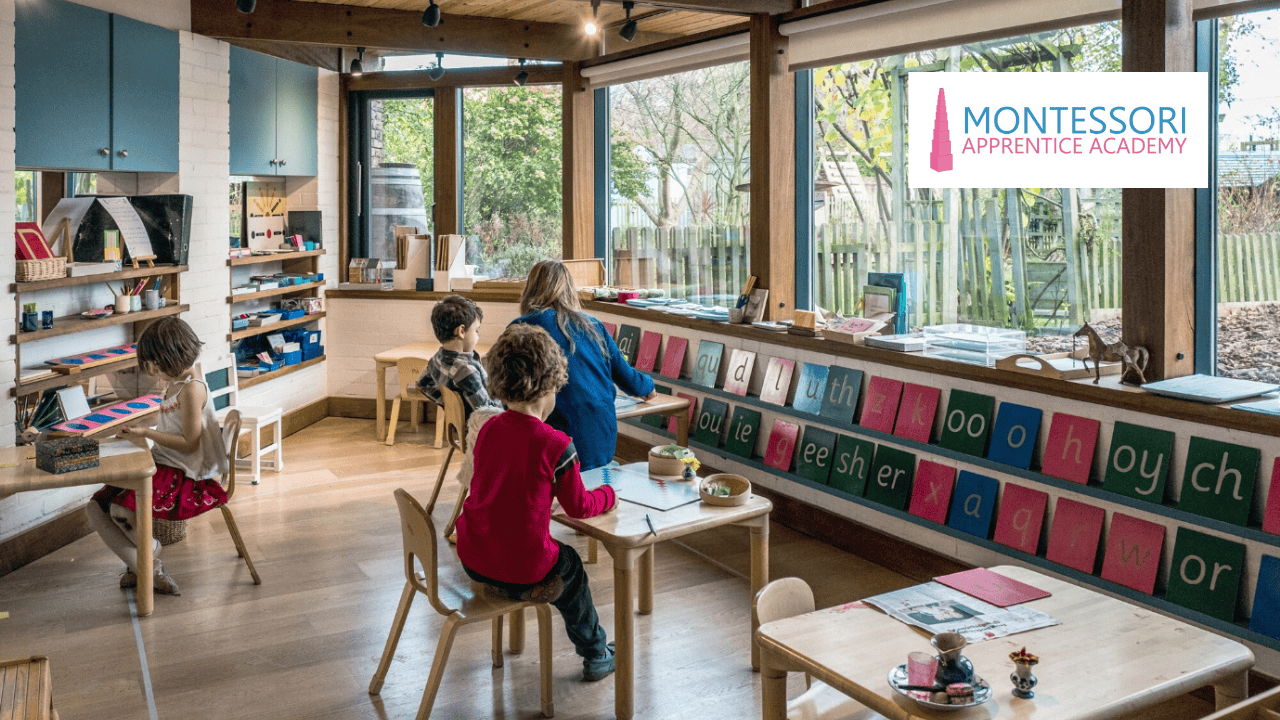
Montessori education, meanwhile, emphasises independence, purposeful activity, careful observation and deep respect for each child’s individual pace of development. These are not simply philosophical ideals; they translate into very specific approaches to environment design, adult interaction, resource selection and planning.
Montessori Apprentice Academy (MAA) brings these two strands together. Apprentices working towards Level 2 Early Years Practitioner, Level 3 Early Years Educator or Level 5 Early Years Lead Practitioner qualifications engage in structured academic study while simultaneously applying what they learn within their own setting. Alongside statutory frameworks such as the Early Years Foundation Stage (EYFS), they explore Montessori-informed principles that encourage prepared environments, intentional resource selection and observation-led planning.
For practitioners, this integration deepens understanding of why environments are organised in particular ways and how adult interactions directly influence children’s concentration and autonomy. Rather than treating qualification content as abstract theory, apprentices are encouraged to reflect critically on real scenarios in their rooms and with their key children. This approach mirrors a core Montessori ethos: one that values observation, responsiveness and respect for individual development, whether applied to children or to adult learners.
Clear progression routes from entry level to leadership
Career progression can feel frustratingly limited in the early years sector, particularly for practitioners starting at entry level. When there is no visible pathway ahead, motivation can dip and talented staff are more likely to leave the profession altogether. Structured apprenticeship pathways directly address this by providing clear, staged development routes that support retention, motivation and a growing sense of professional identity.
At Level 2, practitioners build strong foundations in safeguarding, care routines, child development and communication. They develop the core competencies needed to support children’s daily experiences with confidence and care.
At Level 3, they take on greater responsibility, developing skills in planning, assessment, inclusive practice and leading learning experiences. This is often the stage where practitioners begin to see themselves as educators, not just carers.
At Level 5, the focus shifts decisively to leadership. This includes mentoring colleagues, shaping curriculum intent, contributing to quality improvement processes and preparing confidently for Ofsted inspection.
By viewing professional development as a continuous journey rather than a single qualification milestone, practitioners can see a clear pathway stretching from entry-level roles right through to senior leadership positions. This kind of progression strengthens not only individual careers but also the long-term stability and capability of entire early years teams.
Embedding reflective practice and inspection readiness
Under Ofsted’s Education Inspection Framework (EIF), settings are expected to articulate clearly their curriculum intent, implementation and impact. Leaders must demonstrate that practice across the setting is coherent, inclusive and purposeful. For many managers and practitioners, meeting these expectations can feel daunting — particularly when day-to-day operational pressures leave limited time for reflection.
Well-designed apprenticeship programmes that encourage structured reflection can significantly strengthen this process. Through their studies, practitioners are supported to regularly ask themselves searching questions:
- How does our environment genuinely promote independence and curiosity?
- What evidence demonstrates children’s progress over time?
- How do we adapt our approach for vulnerable or disadvantaged children?
- How are we actively developing our own professional knowledge?
By linking assessment criteria to real evidence within the setting, apprentices gain genuine confidence in discussing and articulating their work. This not only supports individual professional development but also contributes to building a culture of continuous improvement that benefits the entire team — and, ultimately, the children in their care.
Inclusion, partnership and building long-term resilience
Inclusion is a central priority within early years provision, both for the children attending settings and for the workforce itself. As settings increasingly support children with additional needs, special educational needs and disabilities (SEND), and diverse family backgrounds, it is equally important that apprentices receive responsive, inclusive support during their own training.
Effective apprenticeship providers work closely with employers to identify additional learning needs early, provide structured guidance and maintain clear, open communication throughout the programme. When practitioners experience inclusive, responsive training themselves, they are far better equipped to embed inclusive strategies within their own rooms — strengthening practice across the entire setting.
High-quality apprenticeship delivery also depends on strong partnership working between all parties involved. Employers, tutors and apprentices share responsibility for progress, safeguarding and professional development. Clear onboarding processes, regular progress reviews, alignment between workplace tasks and qualification requirements, and transparent communication all help to ensure that apprenticeships are genuinely integrated into daily practice rather than operating as a separate, disconnected activity. This collaborative approach makes staff development purposeful and directly aligned with organisational goals.
Beyond the qualification: continuing professional development
Completing an apprenticeship marks an important achievement, but it should not represent the end of a practitioner’s learning journey. Continuing professional development (CPD) plays a vital role in sustaining quality and keeping practice fresh, responsive and informed.
Short courses, sector updates and ongoing professional discussion all enable practitioners to remain responsive to policy changes, emerging research and evolving best practice. Settings that foster a culture of continuous learning — where curiosity is encouraged and professional growth is celebrated — tend to be more adaptable, more resilient and better placed to deliver outstanding outcomes for children.
Further information about MAA’s programmes, apprenticeship pathways and CPD opportunities can be found at montessoriapprentice.co.uk. Sector updates and professional discussion can also be followed through MAA’s LinkedIn page.
Looking ahead
The early years sector faces real and ongoing challenges, but within those challenges lie significant opportunities. Inclusive training, collaborative partnerships and continuous development together contribute to building a skilled, confident and resilient workforce.
In a sector defined by change, reflective apprenticeship-led learning grounded in Montessori principles remains a practical and meaningful strategy for strengthening long-term resilience — and, most importantly, for improving the outcomes and experiences of the youngest children in our care.
